A quieter way to make every child feel included
A special educator uses tactile play, patience, and small rituals to help one child participate with confidence.
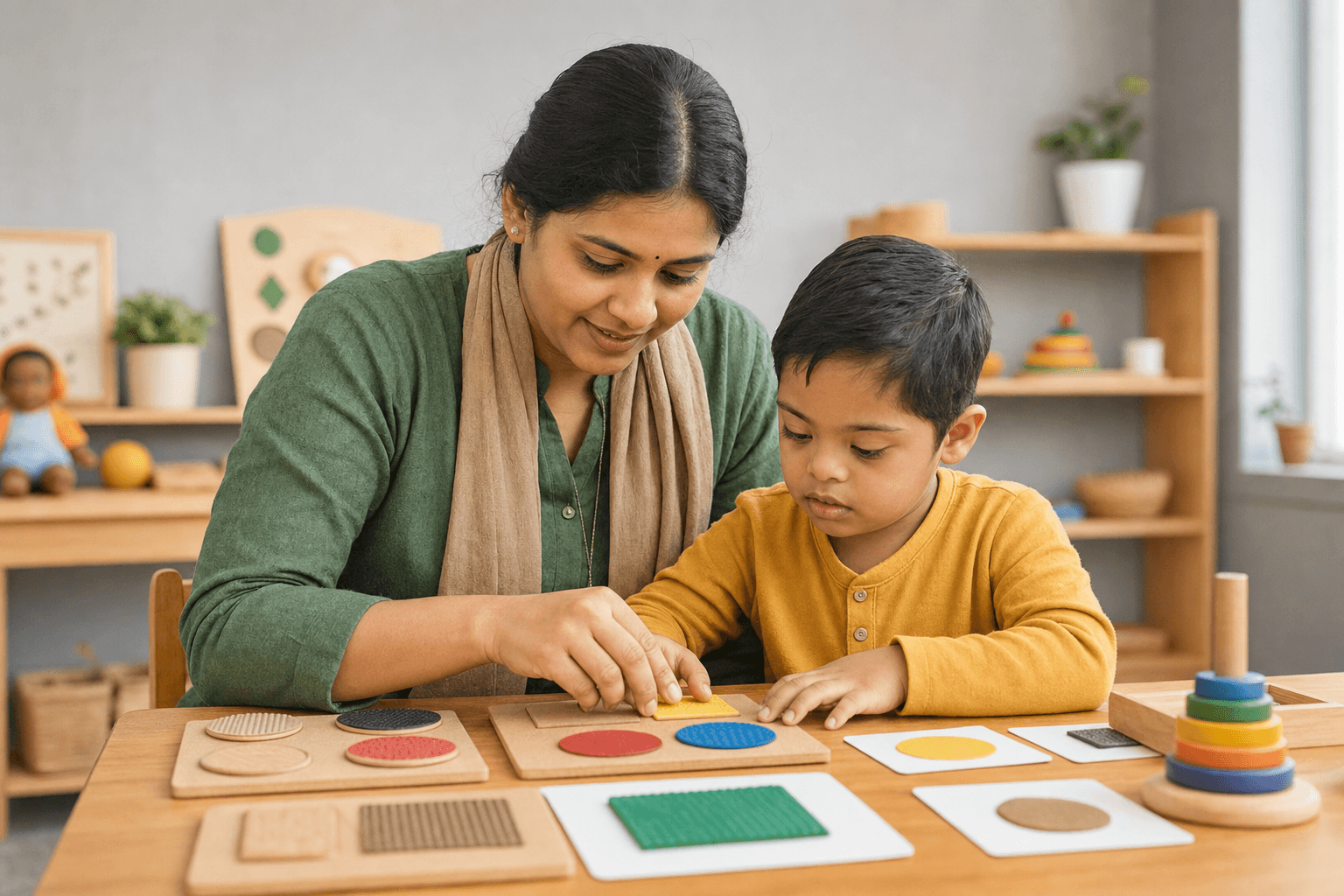
Aarav did not like noise. In a classroom of forty, the morning assembly was a wall of sound he could not cross. For weeks he sat at the edge, hands over his ears, a boy trying to make himself smaller.
Inclusion is not a ramp you build once. It is a hundred small adjustments made quietly, every day, until a child stops feeling like a guest in the room.
Starting with the hands
We began with textures — sandpaper letters, clay numbers, a bowl of dried beans to count. Aarav could learn through his fingers what his ears would not let in. Slowly, the alphabet became something he could hold.
Every child is already trying their best. Our job is to change the room, not the child.
By the end of the term, Aarav led the counting game. He still does not love the assembly. But now he stands in it — hands at his sides, a boy who has decided the room is his too.
A special educator focused on inclusive, sensory-friendly classrooms where children of every ability learn side by side.
View profile · 1 story